


XI JINPING UNVEILS ASIA-PACIFIC PROSPERITY VISION, WITH OPPORTUNITIES FOR WEST AFRICA
By: James Kamara-Manneh
Chinese President Xi Jinping has outlined an ambitious vision for economic transformation, regional integration and shared prosperity, calling for stronger cooperation among Asia-Pacific economies while presenting opportunities that could extend beyond the region to developing economies in Africa, particularly West Africa.
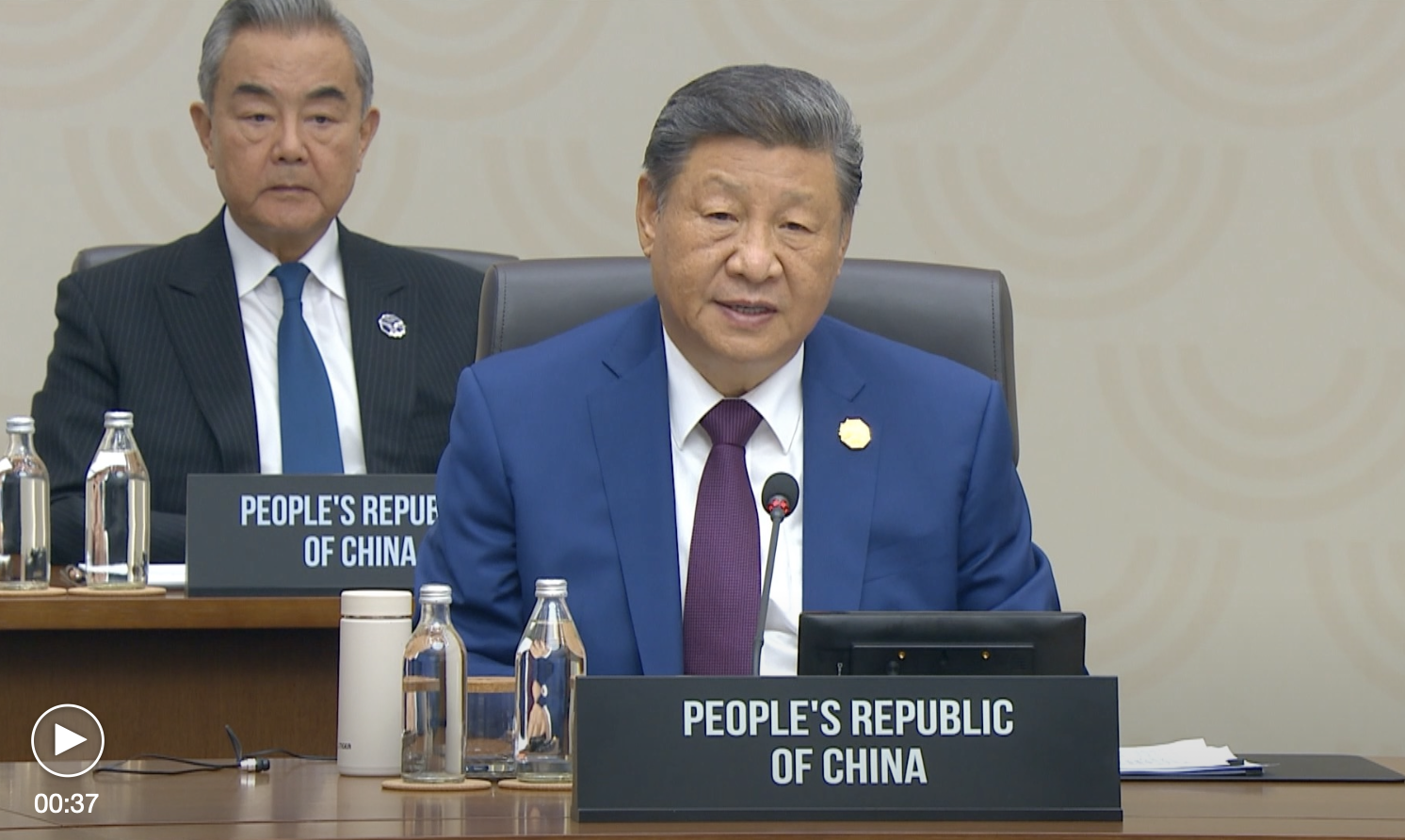
Delivering a keynote address at the APEC CEO Summit 2026 in Shenzhen, China, on November 18, under the theme “Forging Ahead with Resolve Toward a Bright Future for the Asia-Pacific,” President Xi identified peace and stability, openness and cooperation, technological innovation, and mutually beneficial development as four essential pillars for sustainable economic growth.
His message comes at a time when the global economy faces uncertainty, weakening growth momentum, increasing protectionism and rapidly changing technological realities.
Xi argued that countries must choose cooperation over confrontation, openness over isolation and innovation over outdated development approaches.
Although primarily directed at the Asia-Pacific, his proposals carry important implications for West African countries seeking investment, industrialisation, technological advancement and access to international markets.
The first pillar of Xi’s vision is maintaining peace and stability as the foundation for economic development.
He maintained that prosperity cannot exist without security and that security depends on stability. According to him, the relatively stable environment enjoyed by the Asia-Pacific over recent decades has contributed significantly to its economic progress and its position as an engine of global growth.
He therefore called for resolving international differences through dialogue, consultation and cooperation while promoting an inclusive international economic order.
For West Africa, this presents an important development lesson. Political instability, insecurity and governance challenges continue to undermine investment and economic growth across parts of the region.
Countries such as Sierra Leone, Liberia, Guinea, Ghana and Nigeria need stable political environments, credible institutions and predictable investment policies to attract long-term investment.
The second pillar focuses on openness, trade and international cooperation.
Xi called for protecting the World Trade Organization-centred multilateral trading system, promoting free trade and investment, strengthening supply chains and advancing the proposed Free Trade Area of the Asia-Pacific.
He also highlighted digital trade, cross-border e-commerce and smart customs systems as important tools for improving economic integration.
These proposals could benefit Asia-Pacific businesses through improved market access, reduced trade barriers and stronger regional supply chains.
For West Africa, the vision complements the objectives of the Economic Community of West African States (ECOWAS) and the African Continental Free Trade Area (AfCFTA), both of which seek to strengthen regional trade and economic integration.
China’s expanded zero-tariff policy for African countries, effective May 1, 2026, also creates opportunities for African exporters seeking access to the Chinese market.
Sierra Leone could explore opportunities for exporting agricultural products, cocoa, coffee, fisheries products and other commodities, provided local producers meet the required quality and regulatory standards.
However, the greater opportunity lies in moving beyond exporting raw materials towards local processing and manufacturing, allowing African countries to capture more economic value from their natural resources.
The third pillar is technological innovation.
Xi emphasised artificial intelligence, digital transformation, scientific cooperation and green development as essential drivers of future economic growth.
He highlighted China’s experience in developing industrial robotics, autonomous driving, new-energy vehicles and other emerging technologies, arguing that innovation must be translated into practical improvements in production and everyday life.
For West Africa, technological cooperation could transform agriculture, healthcare, education, mining, transportation and financial services.
In Sierra Leone, for instance, agricultural technology could improve mechanised farming, irrigation, food storage and processing. Artificial intelligence and digital platforms could strengthen public administration, financial inclusion and educational delivery.
Partnerships in solar energy, battery storage and other renewable technologies could also help address electricity challenges that continue to constrain industrial development.
However, technology transfer must go beyond importing equipment. African countries need technical training, research partnerships, local employment and the development of indigenous expertise.
The fourth pillar emphasises inclusive development and mutually beneficial cooperation.
Xi acknowledged the differences in economic conditions and development levels among Asia-Pacific economies, arguing that cooperation must recognise these differences.
He called for stronger collaboration in transportation, public health, energy, food security and anti-corruption, while ensuring that economic growth benefits all communities.
This approach is particularly relevant to West Africa, where economic growth has not always translated into improved living conditions for ordinary citizens.
Investment partnerships should therefore prioritise employment, food production, healthcare, infrastructure and opportunities for small and medium-sized enterprises.
A significant part of Xi’s address focused on China’s 15th Five-Year Plan for 2026–2030, which he described as an opportunity for international business communities.
He disclosed that China’s economy grew by 4.6 percent during the first three quarters of 2026, highlighting its continued focus on innovation-driven growth, industrial modernisation and green development.
Xi identified China’s enormous consumer market, technological advancement and improving investment environment as three major opportunities for international businesses.
He also reaffirmed China’s commitment to high-quality Belt and Road cooperation, inviting businesses from across the world to participate in its development opportunities.
For West Africa, these priorities could open opportunities in infrastructure, agriculture, manufacturing, energy and digital technology.
China’s cooperation with African countries through the Forum on China-Africa Cooperation (FOCAC) provides an existing framework for advancing these partnerships.
Sierra Leone, with its mineral resources, agricultural potential, fisheries and strategic coastline, could benefit from stronger economic engagement with China.
Investment in mineral processing, agro-industrial development, renewable energy and transportation infrastructure could help create employment and strengthen domestic productive capacity.
However, African governments must ensure that foreign investment agreements prioritise local industries, technology transfer, transparent procurement and sustainable economic returns.
Xi’s vision also raises important questions about how developing economies can participate in an increasingly interconnected global economy.
For West Africa, the immediate priorities should include strengthening regional infrastructure, improving cross-border trade, investing in digital connectivity and developing local manufacturing.
The region must also address challenges involving electricity shortages, inadequate transportation networks, limited industrial capacity and weak export competitiveness.
While China’s economic transformation offers valuable lessons, African countries must adapt those lessons to their own circumstances rather than simply replicate another country’s development model.
There are also risks that require careful consideration, including trade imbalances, excessive borrowing, technology dependence and unequal distribution of investment benefits.
Consequently, international partnerships must be guided by national development priorities and strong accountability mechanisms.
President Xi Jinping’s address at the 2026 APEC CEO Summit presents a development vision built around peace, openness, innovation and shared prosperity.
For the Asia-Pacific, these priorities could strengthen regional integration, technological advancement and economic competitiveness.
For West Africa, they offer potential opportunities to expand trade with China, attract productive investment, improve infrastructure, strengthen food security and accelerate industrialisation.
For Sierra Leone, the challenge is to translate these opportunities into practical national development outcomes through strategic partnerships, effective governance and investment in human capital.
Ultimately, the success of this vision beyond Asia will depend not only on China’s willingness to cooperate but also on Africa’s readiness to negotiate beneficial partnerships and build the institutions required to sustain development.