
Two Years of Feed Salone — Are We Eating the Rice We Grow?

By Edward Dictionary Caulker
Two years after President Julius Maada Bio launched his flagship Feed Salone initiative, Sierra Leone’s dream of food self-sufficiency is once again on the national table this time served with optimism, scrutiny, and a familiar question from citizens:
“When will we begin to eat the rice and meat?”
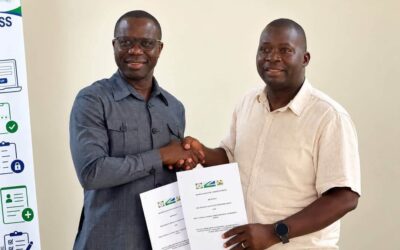
At a colourful ceremony in Kambia District, attended by farmers, paramount chiefs, and international partners, President Bio marked the two-year anniversary of Feed Salone under the global World Food Day theme, “Hand in Hand for Better Food and a Better Future.” The occasion featured the unveiling of the Feed Salone Two-Year Progress Report and the launch of a $105 million Livestock and Livelihood Development Project.
“Two years ago, we launched Feed Salone with a clear message grow what we eat and eat what we grow,”
President Bio said. “Today, the results are visible: rice production is rising, imports are declining, and local food is becoming more available and affordable.”
For President Bio, this was more than a policy milestone it was personal. Recalling his childhood in a farming community, he spoke of how agriculture sustained his family and shaped his understanding of resilience and self-reliance.
Government data shows local rice production is up and food imports have fallen modestly. Yet, in markets across the country, the story feels different. A 50kg bag of local rice costs nearly the same as imported brands, and meat remains a luxury item for many families.
The irony is clear: while the nation celebrates agricultural progress, ordinary Sierra Leoneans still ask, “When will we begin to eat the rice and meat?”
Economic analysts note that the success of Feed Salone must be measured not only in tonnage and hectares but also in affordability and nutrition. Food security, they argue, is not just about growing enough it’s about ensuring citizens can afford to eat what they produce.
One of the day’s major highlights was the launch of the $105 million Livestock and Livelihood Development Project, jointly funded by the Islamic Development Bank (IsDB), IFAD, and the OPEC Fund.
The project aims to strengthen poultry and cattle farming, expand feed production, and improve rural incomes particularly in Kambia, Port Loko, and Bombali, districts long considered the backbone of Sierra Leone’s agriculture.
If fully realized, it could reduce the country’s dependence on imported chicken, beef, and eggs while creating jobs and improving nutrition. Yet, for many smallholder farmers, the basics remain elusive: access to credit, tools, veterinary services, and reliable markets.
“We can grow, but getting our rice to the market is the problem,” said one farmer from Rokupr. “Sometimes the crops rot before buyers arrive.”
The newly launched Rural Farmers Radio 98.9 FM is one of Feed Salone’s creative efforts to bridge communication gaps between policymakers and farmers. Broadcasting agricultural tips, weather updates, and success stories, it’s designed to keep rural communities informed.
But as one listener aptly put it, “Information alone cannot till the land.”
Speaking at the event, Mr. Omar Davis, Country Operations Manager for the Islamic Development Bank, highlighted growing international confidence in Sierra Leone’s agricultural sector.
“The partnership between the IsDB and Sierra Leone now exceeds $500 million in cumulative approvals, with $255 million currently active,” he said. “The last five years have recorded more approvals than nearly six decades before 2020showing confidence in Sierra Leone’s reform path.”
This surge in international investment underscores Sierra Leone’s reform efforts. Yet, citizens expect these figures to translate into lower food prices, more jobs, and better nutrition.
Feed Salone is one of the Big Five Game Changers in President Bio’s development agenda and arguably the most tangible because food touches every home. But after two years, the real test lies in delivery, not decoration.
The initiative has made measurable progress, attracting unprecedented investment and political attention. However, transforming agricultural policy into daily nourishment remains the defining challenge.
For Sierra Leone to truly feed itself, the farmer in Kambia, the mother in Kailahun, and the student in Freetown must all feel the impact not in reports or ceremonies, but at the dinner table.
Until then, the question that lingers across villages and cities alike remains simple, powerful, and deeply human:
“When will we begin to eat the rice and meat?”
Bottom of Form