

4 Million Condoms Donated to Security Forces Amid HIV Prevention Gaps

By Sorie Sesay
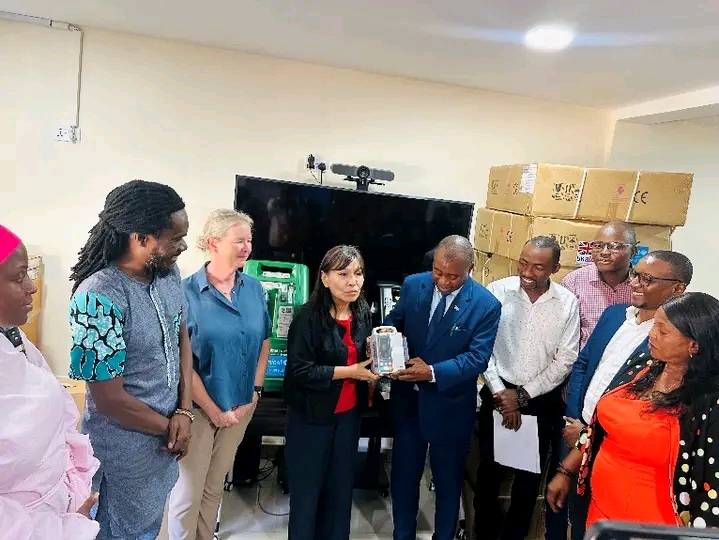
The Republic of Sierra Leone Armed Forces (RSLAF) and the Sierra Leone Police (SLP) have received a consignment of approximately four million “Protector Plus” condoms as part of efforts to curb the spread of HIV/AIDS and other sexually transmitted infections within the country’s security sector.
The donation, facilitated by the National HIV/AIDS Secretariat in collaboration with the Ministry of Health and CARE Sierra Leone, was supported by the German Development Bank under the HIV Prevention Program and Empowerment of Women (HAPP IV).
The handover ceremony took place at CARE’s office in Tengbeh Town, Freetown.
Speaking at the event, CARE Sierra Leone’s Health Program Advisor, Samuel Moscray, said the intervention reflects sustained collaboration between the government and international partners to strengthen HIV prevention efforts. He noted that the broader HIV prevention initiative, which began in 2006 and concluded in 2024, has now transitioned into a locally managed, sustainable programme.
Moscray emphasized that the initiative goes beyond distribution, focusing on behavioral change and effective utilization. He highlighted the establishment of a social marketing agency, SHINE, which continues condom promotion and distribution under the supervision of the National HIV/AIDS Secretariat.
Delivering the keynote address, Deputy Minister of Health, Professor Dr. Charles Senessie, described the donation as timely, particularly as the country faces shortages of essential HIV prevention commodities. He said the National HIV/AIDS Secretariat has, since 2013, overseen major KfW-funded interventions, including HAPP III and HAPP IV, with a combined value of €12 million.
According to Senessie, the programmes have expanded access to family planning services, strengthened women’s empowerment initiatives, and contributed to efforts to reduce gender-based violence.
However, he acknowledged ongoing supply challenges, especially within the security sector, where access to condoms and HIV testing kits remains limited.
Health officials say the latest donation is expected to ease immediate shortages while reinforcing national efforts to reduce new HIV infections, particularly among high-risk groups such as uniformed personnel.