




5% Rice Import Duty: Women Farmers Bear the Brunt as CSOs Demand Full Transfer of Revenue to Agriculture Fund

By James Kamara-Manneh
The Budget Advocacy Network (BAN), in partnership with Christian Aid and the 50/50 Group Sierra Leone, has called for stronger accountability and gender-responsive management of revenue generated from Sierra Leone’s five-percent rice import duty.
The call was made on Thursday, August 6, 2026, during a National Advocacy Summit held at the New Brookfields Hotel in Freetown under the theme: “Assessing the Gendered Impact of Sierra Leone’s 5% Rice Import Duty.”
The summit brought together representatives from civil society, government institutions and other stakeholders to examine the impact of the rice import duty, particularly on women farmers, food security, agricultural investment and household welfare.
Presenting findings from the assessment, Research Director and Programme Lead at the 50/50 Group Sierra Leone and IGR, Professor Fredline M’Cormack, said the five-percent rice import duty was introduced under the 2024 Finance Act as part of the government’s Medium-Term Revenue Strategy.
According to the research findings presented at the summit, the government collected approximately Le365.2 million from the five-percent rice import duty between 2024 and 2025.
However, only about Le31.9 million, representing roughly nine percent of the revenue collected, was transferred to the Agricultural Development Fund (ADF), leaving approximately 91 percent yet to be transferred.
Professor M’Cormack said the gap raises questions about whether the intended benefits of the rice import duty are reaching the farmers and communities the policy was designed to support.
She said the research found that women farmers continue to face significant structural barriers despite the existence of laws and policies intended to improve their access to productive resources.

Among the challenges identified were limited access to land, financing, agricultural inputs, seeds, fertilizers, machinery and extension services.
The research also found that women face difficulties accessing markets and obtaining prices that adequately reflect the value of their agricultural production.
Professor M’Cormack argued that while the government’s revenue mobilisation efforts are important, tax policies must also be assessed through a gender and equity lens to determine who benefits and who bears the greatest burden.
She said the introduction of the rice import duty initially created additional pressure on households, particularly women, who reported having to reduce the quantity of food purchased, buy less rice, reduce food waste or substitute rice with other food commodities because of price increases.
Although the government subsequently introduced a rice pricing formula intended to help reduce prices, the research presentation indicated that women farmers still felt that the expected agricultural benefits from the revenue generated by the duty had not materialised at the level anticipated.
The 50/50 Group therefore recommended that the Ministry of Finance transfer all revenue collected from the rice import duty to the Agricultural Development Fund on a quarterly basis.
The group further called on the Ministry of Agriculture and Food Security to allocate at least 30 percent of the rice import duty revenue to women farmers, arguing that such an approach would strengthen women’s participation in agricultural production and contribute to the government’s Feed Salone agenda.
It also recommended that the government publish regular reports showing receipts and transfers into the Agricultural Development Fund, while making information about access to the fund more accessible to women farmers.
The National Revenue Authority was similarly urged to publish information on the amount of revenue collected through the rice import duty to strengthen transparency and public accountability.
Representing the Ministry of Agriculture and Food Security, Director of Exemption Alpha Yayah Mansaray acknowledged the importance of the assessment and said the ministry would consider the recommendations aimed at improving support for smallholder farmers.
He explained that the five-percent duty was part of a broader government strategy to increase domestic agricultural production and reduce the country’s dependence on imported rice.
Mansaray said the government had deliberately maintained the duty at five percent rather than increasing it to ten percent, partly because of concerns that a higher tariff could create significant price pressures.
He said Sierra Leone currently has approximately 73 percent self-sufficiency in rice production, which he described as evidence of progress in the country’s drive to increase domestic production.
He warned that increasing the import duty without a corresponding increase in local production could create market distortions and put additional pressure on consumers.

The Agriculture Ministry representative also stressed that the government’s rice pricing formula should primarily address imported rice and should not undermine local farmers who face substantial production costs.
He said farmers invest heavily in machinery, seeds, fertilizer and other inputs and must be able to sell their produce at prices that allow them to recover their costs and sustain agricultural production.
Mansaray also highlighted government efforts to expand market opportunities for local farmers.
He said the World Food Programme had reduced its purchases of imported rice and increased procurement from local farmers, with the share expected to rise further.
According to Mansaray, government-supported market linkages had resulted in millions of dollars being channelled to local farmers through the purchase, processing, packaging and distribution of locally produced rice.
He also cited the Sierra Leone Produce Marketing Company’s procurement of thousands of bags of rice from farmers in Kambia and Port Loko districts for storage as part of the country’s strategic grain reserve.
The ministry representative said government had also recruited 700 staff for the Ministry of Agriculture, including personnel required to strengthen extension services.
He said the government was simultaneously promoting agricultural diversification by encouraging the production and consumption of cassava, sweet potato, beans and other crops to reduce excessive dependence on rice.
Mansaray said women farmers remain a strategic component of the government’s agricultural programme, pointing to a specific policy pillar focused on supporting women farmers and improving their resilience.
Representing the Ministry of Finance, Abu Bakarr Conteh acknowledged the concerns raised by the report regarding the failure to transfer the full amount of revenue generated from the five-percent rice import duty to the Agricultural Development Fund.
He provided a historical explanation for the rice import duty, noting that rice import tariffs had previously been adjusted during the global financial crisis between 2006 and 2008 as government sought to contain rising domestic prices of essential commodities.
Conteh said the government reintroduced a five-percent rice import duty in 2024 under the 2024 Finance Act.
He explained that rice had also been treated differently under the country’s tax framework because of its importance as a staple food, including its exemption from Goods and Services Tax.
On the specific issue of the revenue transfer, Conteh said the government’s policy commitment was to reinvest the revenue rather than automatically transfer every amount collected directly into the Agricultural Development Fund.
He explained that revenues collected by government first enter the Treasury Single Account before the Ministry of Finance determines how funds are allocated based on government priorities and financial commitments.
Conteh acknowledged that only nine percent of the revenue had so far been transferred and suggested that the Ministry of Agriculture could engage further with the Ministry of Finance to explore mechanisms that would ensure more predictable transfers.
He said one possible solution could be a standing instruction that would allow the relevant portion of the rice import duty revenue to be transferred automatically to the Agricultural Development Fund.
Conteh also defended the decision to retain the rice import duty at five percent.
He said increasing the duty to ten percent could have serious consequences for the local market, including encouraging cross-border smuggling and potentially creating shortages that could push rice prices higher.
He credited the government’s pricing formula with helping to suppress rice prices and cautioned that a higher import duty could reverse some of those gains.
The Finance Ministry therefore supported maintaining the current five-percent rate while continuing discussions on how the revenue generated can be more effectively channelled towards agricultural development.
Senior Economist in the Monitoring, Research and Planning Department of the National Revenue Authority, Mohamed Alie Bah, said the NRA’s role includes providing information to stakeholders and supporting public accountability around revenue collection.
Bah said the authority provided information used by civil society organisations in preparing reports such as the assessment presented at the summit.
He said taxation is ultimately intended to generate resources that government can use to provide social services, infrastructure and other public goods.
He argued that public confidence in taxation is influenced by citizens’ perception of how government uses the money collected.
According to Bah, when government makes a commitment that revenue from a particular tax will support a specific sector, failure to demonstrate that the commitment is being fulfilled can affect public confidence and potentially people’s willingness to pay taxes.
He said the NRA remains committed to providing information that can support public debate and advocacy around government revenue policies.
Bah also highlighted the importance of agriculture to the wider economy, saying increased agricultural production can provide inputs to other sectors, stimulate economic growth and ultimately expand the country’s tax base.

He further disclosed that the NRA was prepared to use radio, television, social media and other public engagement platforms to improve citizens’ understanding of taxation and government revenue policies.
The central issue emerging from the summit was whether the five-percent rice import duty is achieving its intended policy objectives while ensuring that women farmers and vulnerable households receive meaningful benefits.
The findings presented by the 50/50 Group suggest that women remain disproportionately constrained by limited access to land, finance, agricultural inputs, extension services and markets.
Government representatives, however, maintained that substantial interventions are already being implemented to increase local rice production, improve market access and strengthen support for smallholder farmers.
The disagreement therefore appears to centre less on whether agriculture requires greater investment and more on how revenue from the rice import duty should be managed, transferred and accounted for.
The summit concluded with panel discussions during which participants reflected on the findings and developed recommendations aimed at improving the management of rice import duty revenue and strengthening support for women farmers.
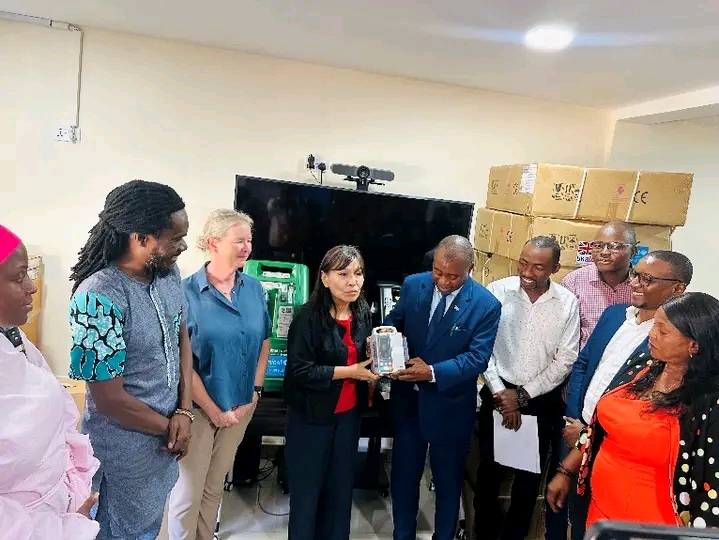
The event ended with group photographs and an exchange of pleasantries among participants.
The debate over the five-percent rice import duty now places renewed focus on three interconnected questions: How much revenue is being collected, where is that money going, and are women farmers receiving a fair share of the benefits?
For civil society groups, the answer requires greater transparency, predictable transfers to agricultural development and deliberate investment in women farmers. For government, the challenge is to balance revenue mobilisation, consumer protection, food security and the sustainability of local agricultural production.