Attorney-General’s Office Holds Consultation on Constitutional and Legislative Reforms

By: Sorie Sesay
The Office of the Attorney-General and Minister of Justice, with support from the Sierra Leone Democracy Strengthening Programme funded by the European Union, has held a national stakeholder consultation on proposed legislative and constitutional reforms recommended by the Tripartite Committee. The engagement took place at the Country Lodge Hotel in Freetown.
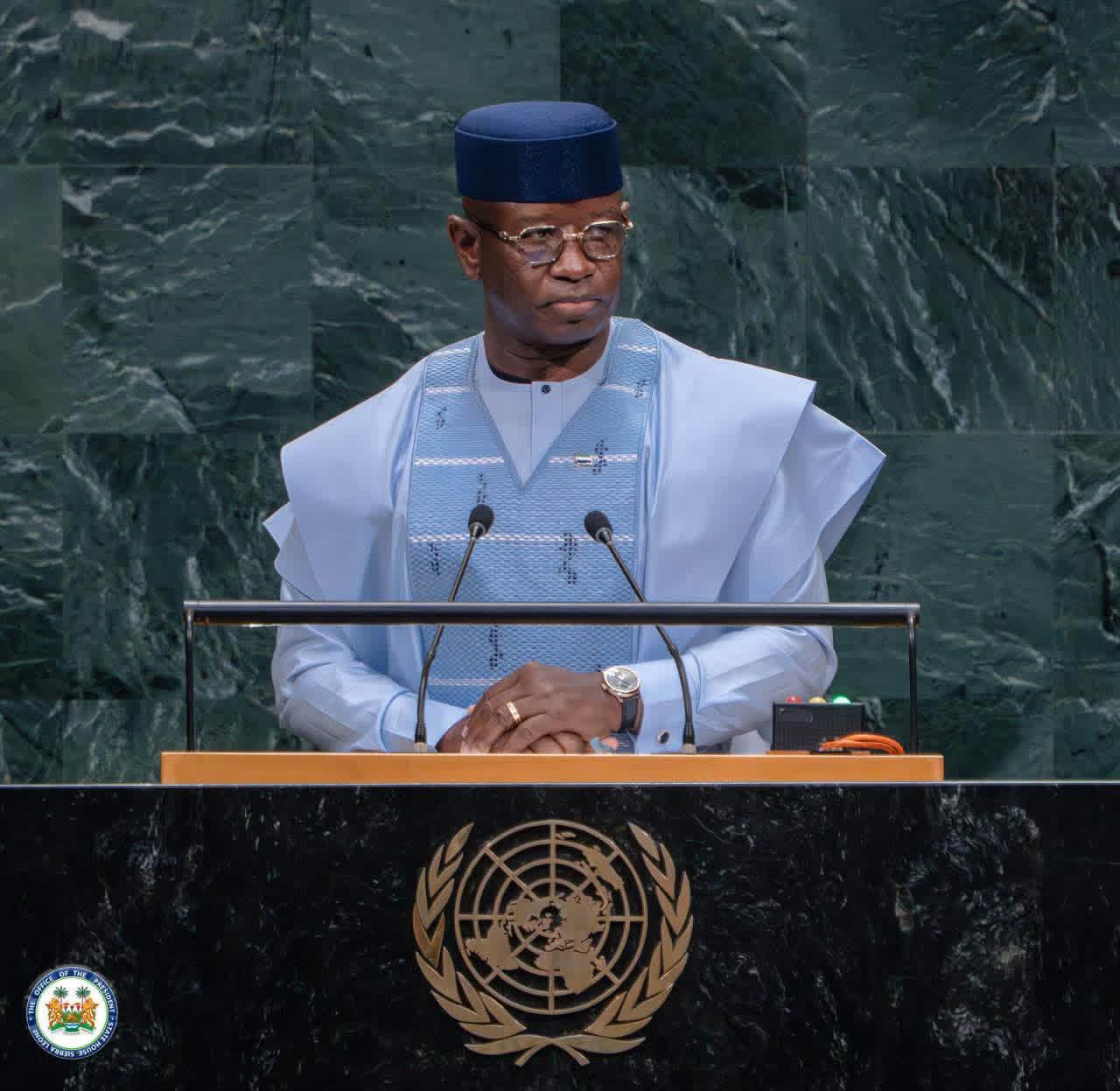
Delivering the keynote address, Dr. Emmanuel Gaima, Principal Executive Adviser to the President on Public Service and Head of the Public Sector Reform Unit, said the consultation marks an important step toward reforming Sierra Leone’s 1991 Constitution.
Dr. Gaima noted that the 1991 Constitution has guided the country for decades, but with changing times and generations, there is a clear need to update it to better reflect Sierra Leone’s current realities and aspirations. He emphasized that successive leaders including former Presidents Dr. Ernest Bai Koroma and Alhaji Ahmad Tejan Kabbah, as well as current President Dr. Julius Maada Bio have all supported constitutional reform to strengthen governance and accountability.
He underscored that the review process has spanned multiple administrations and called on stakeholders to prioritize national interest above party politics. Dr. Gaima further highlighted the crucial role of civil society organizations and the media in ensuring the voices of citizens are heard in the reform process.
Speaking on the progress of the reforms, Attorney-General and Minister of Justice Alpha Sesay said the government is committed to broad consultations to ensure inclusivity and transparency. He disclosed that the Tripartite Committee submitted 80 recommendations to President Bio, many of which fall under constitutional and legislative review.
Among the key proposals under consideration are setting a fixed date for national elections, introducing a 55% threshold for presidential elections, and reviewing the Proportional Representation (PR) system currently used in elections.
Mr. Sesay said these proposals are based on years of public consultation, including nationwide engagements between 2013 and 2017 that involved over 10,000 participants, 70,000 distributed forms, and 150 position papers.
He also referenced outcomes from the National Women’s Conference, which presented 12 major recommendations including strengthening the PR system to enhance women’s participation, peace, and inclusion.
The Attorney-General noted that both the PR and First-Past-the-Post electoral systems have been tested in Sierra Leone, each with distinct advantages and challenges. He said the government’s goal is to adopt an electoral model that promotes peace, inclusion, and political stability.
The consultation forms part of ongoing efforts by the government to review and modernize Sierra Leone’s constitutional framework to support good governance and democratic consolidation.