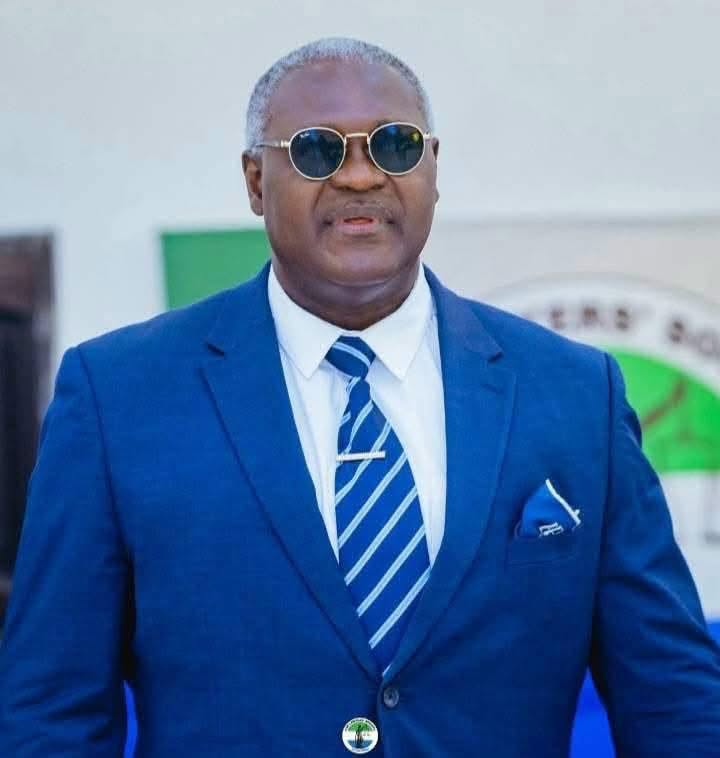


Environment Minister Pledges to Plant 10 Million Trees

By:Reginald Brian Ojukutu Sawyerr
For years, Sierra Leone’s lush landscapes faced increasing threats: shrinking forests, disappearing wildlife, and evident climate change impacts. Floods, landslides, and droughts became frequent, underscoring the urgent need for action.
In this critical setting, Hon. Jiwoh E. Abdulai assumed his role as Minister of Environment and Climate Change. A visionary dedicated to environmental preservation, he had spent his life studying the delicate balance between human activity and nature. Now, leading one of the country’s most vital ministries, he embarked on a mission both daunting and necessary.
Minister Abdulai grasped the urgency of his position. He knew that without immediate and decisive action, Sierra Leone’s rich natural heritage could be lost forever. One bright morning, before an assembly of environmentalists, community leaders, and the media at Comfort Bridge, No. 2 River, he made a bold and historic pledge.
“Today,” he began, his voice strong and clear, “I vow to lead an initiative to plant over 10 million trees across Sierra Leone. This is not just a promise; it is a commitment to future generations, a commitment to preserving the very land that sustains us.”
The announcement resonated nationwide. Ten million trees—a vast and almost unimaginable number. But Minister Abdulai was resolute. He knew this initiative was about more than planting trees; it was about changing mindsets, restoring ecosystems, and building resilience against climate change.
The “Green Sierra” campaign was ambitious in scope, aiming to involve every sector of society—from schoolchildren to farmers, urban dwellers to rural communities. The idea was simple yet powerful: everyone could plant a tree, and each tree planted would contribute to the collective goal.
The campaign also attracted international attention. Environmental organizations and donors such as UNDP and the Global Environment Facility (GEF) recognized Abdulai as a leader actively driving change. Support poured in, both in funding and expertise. Partnerships were forged with neighboring countries facing similar challenges, looking to Sierra Leone as a model for sustainable development.