
Parliament Debates State-Owned Enterprises and Governance Act 2025

By Fatima Muhammad
The Sierra Leone Parliament engaged in a heated debate on Tuesday over the proposed State-Owned Enterprises and Governance Act 2025, a legislative measure aimed at reforming the operations and oversight of state-owned enterprises (SOEs) to enhance transparency, accountability, and efficiency in managing public resources.
Presenting the Bill, Deputy Minister of Finance 2, Bockarie Kalokoh, stressed the urgency of reforming the nation’s SOEs, highlighting that despite government efforts, these enterprises continue to suffer from severe operational inefficiencies.
“The policy is to enhance transparency and accountability,” Kalokoh stated, emphasizing that the Bill seeks to improve service delivery across the country. He noted that Sierra Leone has 24 state-owned enterprises, many of which have been plagued by financial instability, mismanagement, and inefficiencies.
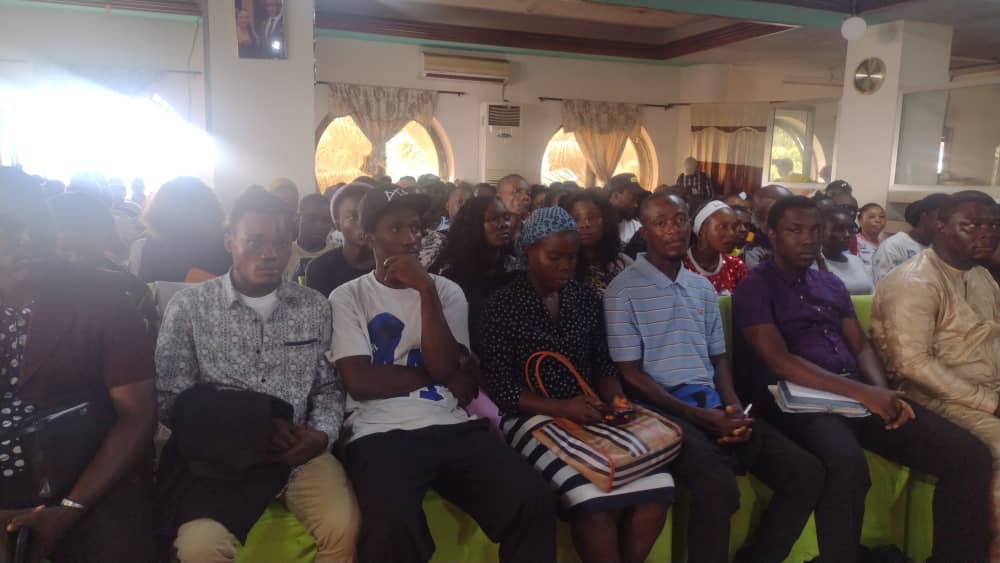
During the debate, several Members of Parliament (MPs) voiced concerns over the past performance of SOEs and the need for structural reforms.
Hon. Catherine Zainab Tarawallie (Bombali District) criticized the lack of responsiveness and accountability of SOEs to Parliament and the citizens.
“State-Owned Enterprises are not taking Parliament and the people of Sierra Leone with utmost seriousness,” Tarawallie said, citing Sierratel, the country’s telecommunications provider, as a prime example of an underperforming entity that could contribute significantly to national development if managed efficiently. She also demanded clarity on the procedures used to privatize government-owned entities.
Hon. France Amara Kaisamba, Chairman of the Finance Committee, acknowledged that some SOEs had performed well in the past but later deteriorated due to poor management, which led to government privatization initiatives.
“To reform the state-owned enterprises is a laudable venture,” Kaisamba stated, supporting the need for legislative intervention.
Echoing similar concerns, Hon. Engineer Fallah Tengbeh (Kailahun District) criticized the longstanding inefficiencies within SOEs, noting that their persistent failures led to the creation of the National Commission for Privatization.
“Our State-Owned Enterprises have not been performing,” Tengbeh said, stressing the need for substantial reforms to make these institutions viable and self-sustaining.
Opposition Chief Whip, Hon. Abdul Karim Kamara, linked the poor performance of SOEs to limited budget allocations within ministries, departments, and agencies (MDAs). He warned that legislative reforms alone would not yield results without proper infrastructure investment.
“No matter the number of legislations made, if the nation is not ready to build on infrastructure, the institutions will find it difficult to perform well,” Kamara cautioned.
While acknowledging the challenges, Hon. Daniel Brima Koroma, Deputy Leader of the Opposition, urged Parliament to summon SOE executives to explain their inefficiencies. He also pointed out that some SOEs, including Sierra Leone Commercial Bank, National Petroleum, and Rokel Commercial Bank, have been success stories that could serve as models for struggling enterprises.
“Regardless of countless challenges in the SOE sector, there are still some success stories,” Koroma remarked, advocating for a balanced approach in scrutinizing the Bill.
Wrapping up the debate, Hon. Saa Emerson Lamina, Deputy Leader of Government Business, assured lawmakers that Parliament would meticulously examine the Bill before its final passage.
“The Bill is now the property of Parliament, and we have the liberty to properly scrutinize it for the people of Sierra Leone,” Lamina stated. He also highlighted Clause 23, which outlines performance contracts for SOEs, as a key area of financial instability requiring close examination.
Following extensive deliberations, the State-Owned Enterprises and Governance Act 2025 was referred to the Legislative Committee for further review under Standing Order 51(1) before proceeding to the final approval stage.
The passage of this Bill is expected to set a new regulatory framework for SOEs, ensuring greater accountability and improved service delivery for the people of Sierra Leone.