

APC Marah Launches “The Kalian Model” — A Bold, Data-Driven Vision to Empower Paramount Chiefs and Transform Sierra Leone’s Chiefdoms

By: James Kamara-Manneh
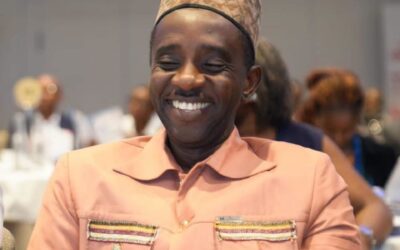
In a powerful and emotionally resonant keynote address titled “The Kalian Model: Transforming Chiefdoms Through Data and the Positioning of Paramount Chiefs,” Dr. Kaifala Marah, former Minister of Finance, Governor of the Bank of Sierra Leone, and current aspiring 2028 APC flagbearer, unveiled a bold vision for grassroots transformation rooted in evidence-based governance and traditional leadership empowerment.
Before an audience of Paramount Chiefs, Members of Parliament, development partners, local government representatives, civil society organizations, and community leaders, Dr. Marah delivered a masterful synthesis of personal experience, policy insight, and moral conviction framing the Kalian Model as both a development strategy and a democratic covenant with the people of Sierra Leone.
A Journey from the Village to Vision
With stirring humility, Dr. Marah began by retracing his journey from the dusty paths of Musaia, Sengbelero, and Kondenbaia to the corridors of power in Freetown and international institutions. “Before all the titles,” he declared, “I was a son of Sierra Leone’s villages a boy who walked barefoot through red earth, fetched water from streams, and studied by lamplight.”
That childhood, marked by resilience and struggle, remains the moral compass of his leadership. It is the crucible from which his conviction was born: that true national transformation begins where poverty persists most stubbornly within the 190 chiefdoms that define the heart and soul of Sierra Leone.
From Conviction to Concrete Action
Dr. Marah detailed his transition from policymaker to hands-on development actor. Upon returning from international service at the Commonwealth Secretariat, he personally financed community projects rehabilitating roads in Kabala and Bafodia, supporting schools in Koinadugu and Falaba, and launching Musu Banky, a microfinance initiative providing women’s loans at only 5% interest.
However, his fieldwork revealed a sobering truth: many interventions fail because they are not grounded in data. Boreholes were drilled in the wrong places, health centres misplaced, and schools built without population mapping. This disconnects between Freetown’s policies and the realities of remote chiefdoms inspired Dr. Marah’s pivotal realization: “We cannot develop what we do not measure; we cannot transform what we do not understand.”
Building on a Legacy of Empowerment
Paying tribute to past administrations, Dr. Marah acknowledged President Ahmad Tejan Kabbah for reintroducing local government in 2004, President Julius Maada Bio for strengthening the framework in 2022, and former President Dr. Ernest Bai Koroma for transforming traditional authority into a vital arm of governance by providing chiefs with salaries, administrative support, and recognition.
“President Koroma laid the foundation,” Dr. Marah affirmed. “I am here to complete the house.”
The Kalian Study: A Data Revolution in Development
Returning to his home district, Dr. Marah initiated the Kalian Chiefdom Study, a systematic evidence-gathering exercise in 17 villages. The findings, he said, revealed “the stark realities behind the statistics.”
- Water: 76% of households depend on unsafe sources, forcing women and children to walk long distances daily.
- Healthcare: One health unit serves over 10,000 people, staffed by only two nurses and one midwife.
- Education: The pupil–teacher ratio stands at 47:1, and many schools lack furniture, materials, and accessibility during the rains.
- Infrastructure: Roads are in deplorable condition, cutting off entire communities from markets and medical care.
These, he said, are not abstract data points but “the faces and futures of real people trapped in systemic neglect.”
The Four Pillars of the Kalian Model
Dr. Marah outlined the Kalian Model as a four-step framework for measurable, community-led transformation:
- Comprehensive Data Collection: Digital, continuous, and precise mapping of needs across every chiefdom sector—education, health, water, roads, agriculture, and enterprise.
- Evidence-Based Planning: Paramount Chiefs and councils move from guesswork to data-driven requests, engaging government and donors with specific, actionable needs.
- Transparent Implementation and Monitoring: Every resource tracked, every outcome measured, ensuring accountability both upward and downward—to citizens and partners alike.
- Continuous Learning and Adaptation: Chiefdoms exchange lessons, refine approaches, and evolve through shared national feedback mechanisms.
“This is not charity,” he emphasized. “This is empowerment. This is democracy in action.”
Bintumani II: Scaling the Vision Nationwide
Building on the Bintumani I Town Hall dialogue on macroeconomic reform, Dr. Marah announced the Bintumani II Framework a national strategy to replicate the Kalian Model across all 190 chiefdoms. The framework will establish a Chiefdom Development Database, a People’s Development Charter, and capacity-building programs for Paramount Chiefs, ensuring that every plan and project is grounded in verified data.
“Bintumani II is not another conference where speeches are made and nothing changes,” he said. “It is a covenant with the people of Sierra Leone.”
Beyond Development: A Democratic Reawakening
Dr. Marah drew a direct link between grassroots development and democratic legitimacy. “Development that does not reach our villages is not development,” he asserted. “Democracy that does not empower our communities is not democracy.”
While reaffirming his deep expertise in fiscal and monetary policy, he emphasized that macroeconomic stability must translate into tangible village-level outcomes—clean water, functional health systems, passable roads, and real educational opportunities.
“The Kalian Model,” he said, “connects the macroeconomic to the micro-reality. It ensures that every policy made in Freetown reflects the lived experience of our people.”
A Covenant with the Nation
In his closing, Dr. Marah made a solemn covenant with Sierra Leoneans—promising to continue evidence-based development whether in office or out of it, to empower local leadership through data and training, and to uphold transparency and accountability in all resource use.
“I covenant to put Sierra Leone first,” he declared. “Not my ambition. Not my region. But Sierra Leone—all of Sierra Leone.”
A New Hope for Sierra Leone
Ending on an inspiring note, Dr. Marah reflected on his full-circle journey from the barefoot boy of Musaia to the statesman of purpose. His return to Kalian, he said, was not nostalgia but necessitya moral call to transform the places where the nation’s hope was first born.
“What I found in Kalian was not just data,” he concluded. “I found a mirror reflecting the reality of millions. I found a challenge demanding action. I found a covenant demanding fulfilment.”
With the Kalian Model as his instrument of transformation and the Bintumani II Framework as his roadmap, Dr. Kaifala Marah positions himself as a visionary leader redefining governance anchoring progress in evidence, empowering chiefs as agents of change, and restoring faith that Sierra Leone’s renewal can begin from the ground up.
“This is not just development,” he said. “This is democracy. This is empowerment. This is the New Hope for Sierra Leone.”