



ECSL Defends 3% Election Result Discrepancy

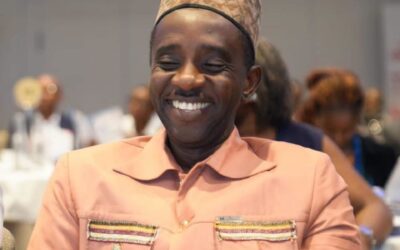
At a recent press engagement held at the Electoral Commission for Sierra Leone (ECSL) headquarters in Freetown, Commissioner Abubakarr Koroma, representing the North, provided insights into the 3% difference between the National Election Watch (NEW) tally and the official results of the 2023 elections. According to a report by Awoko, Koroma sought to address public concerns and clarify the reasons behind the discrepancy.
During the question-and-answer session on Monday, Koroma explained that the ECSL employed 11,832 polling station staff across the country, compared to NEW’s 700 polling staff. This substantial difference in coverage contributed to varying results between the two organizations. He highlighted that while NEW reported 53.1% for the ruling SLPP party and 49.1% for the APC party, ECSL’s comprehensive count showed 56.1% for SLPP, with a narrower margin for the APC.
Koroma attributed the discrepancies partly to challenges posed by the Proportional Representation Voting System (PRVT), which he noted has been problematic not only in Sierra Leone but also globally. He emphasized that despite these challenges, the overall difference in results was minimal, only 3%.
“In my view, a 3% difference should not be a major issue,” Koroma commented during the briefing. “We covered significantly more polling stations than NEW, but PRVT presented significant challenges, which are not unique to Sierra Leone.”
The commissioners acknowledged that electoral challenges related to PRVT are widely reported globally. “While Sierra Leone’s situation may differ, similar issues have been observed elsewhere,” Koroma remarked. He also pointed out that not all election observers are entirely independent, which can affect the accuracy and perception of election results.
Regarding the exclusion of votes from security forces, which only vote for presidential candidates, Koroma noted that this aspect was not included in the ECSL’s comprehensive data. He referenced cases in other African countries like Kenya and Malawi, where initial election results were contested and overturned by the supreme courts.
Another commissioner at the conference suggested that those dissatisfied with ECSL’s data disaggregation should seek legal redress through the supreme court, emphasizing the importance of following due process to resolve electoral disputes.
Overall, the press engagement provided a detailed examination of the factors contributing to the discrepancy in the 2023 election results, underscoring the complexities and challenges inherent in electoral processes, particularly those involving PRVT systems and extensive data collection across diverse polling stations.