




Producers’ Retreat Controversy: Who Is Fooling Who in Sierra Leone’s Entertainment Industry?
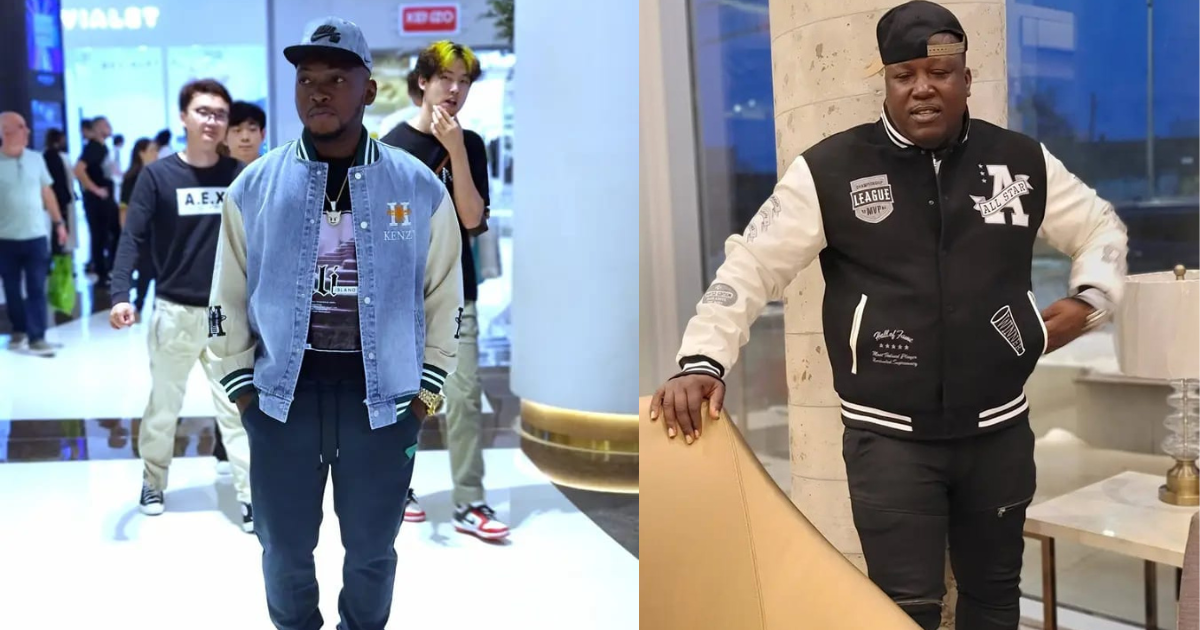
By: John Lamin Alpha (Bigdaddy)
A fresh controversy has emerged in Sierra Leone’s entertainment sector following a public notice by the Association of Music Producers Sierra Leone (AMPE-SL) distancing itself from the upcoming Producers’ Retreat 2026 organized by the Office of the Entertainment Ambassador.
At the center of the debate is a simple but troubling question: How can a national producers’ retreat be organized without formally engaging the national body representing producers?
On January 23, 2026, Entertainment Ambassador Kao Denero announced via his official Facebook page that his office would embark on a weekend retreat in Kailahun at the Cacao Hotel. According to him, the retreat would experiment with different sounds, with the public helping to choose the best to become “SAL VIBEZ.”
He stated clearly:
“I will be selecting five producers, three bloggers and three artists to be part of this process. This does not mean the sound created will be the ultimate, you are also free to do your own with no arguments.”
The announcement suggested a selective process not necessarily a nationwide producers’ convention, but a curated creative retreat. It also emphasized freedom of artistic expression beyond the retreat’s outcome.
Fast-forward to last week, when official flyers for the retreat surfaced. Shortly after, AMPE-SL, led by President Moses Baimba (Lord-Mo), issued a public statement clarifying that the association was not formally engaged.
According to AMPE-SL:
- Only a few individual members were contacted privately.
- The association, which claims to represent about 95% of producers nationwide, was not officially consulted.
- Any national initiative aimed at creating an industry sound must involve formal engagement with the association.
- Proper consultation is necessary for governance, validation, professional input, and protection of intellectual rights.
The association emphasized it remains open to collaboration but only through inclusive and transparent processes.
The controversy appears to stem from two different interpretations of what the retreat represents.
From the Ambassador’s initial statement, the retreat seemed like a selective creative experiment involving a handful of individuals. It did not explicitly present itself as an association-backed national producers’ summit.
However, once it was framed as a major initiative toward creating a “national sound” and supported by the Sierra Leone Commercial Bank expectations shifted. At that level, AMPE-SL argues, formal institutional engagement becomes necessary.
The core issue may not be whether producers were invited but whether the association itself was officially recognized and consulted.
This raises an important industry question:
Can a government-appointed entertainment office organize sector-specific initiatives by selecting individuals directly, without engaging recognized professional bodies?
Technically, yes an ambassador can select participants for a creative retreat.
But politically and professionally, bypassing an association that claims to represent 95% of producers may create perceptions of exclusion, division, or undermining of industry structures.
In industries where governance structures are still developing, institutional respect matters. Failure to observe protocol can deepen mistrust.
Many observers are asking whether this type of disconnect is part of the reason Sierra Leone’s entertainment industry struggles to compete regionally.
Common challenges include:
- Lack of unified industry governance
- Personalization of initiatives rather than institutionalization
- Weak collaboration between government appointees and industry bodies
- Limited long-term strategic planning
When stakeholders operate in silos even with good intentions progress slows.
Is the Ambassador side-lining the association?
Or is the association reacting to a retreat that was never meant to represent the entire industry?
The truth may lie somewhere in between:
- The Ambassador has the right to curate a creative retreat.
- AMPE-SL has the right to demand formal recognition when national branding is involved.
The situation does not necessarily point to deception but rather to poor communication and unclear expectations.
If the goal is truly to develop a recognizable “SAL VIBEZ” and strengthen Sierra Leone’s music identity, then collaboration is not optional it is essential.
A constructive solution could include:
- A joint technical meeting between the Office of the Entertainment Ambassador and AMPE-SL
- Clear definition of the retreat’s scope and objectives
- Establishment of a broader consultative framework for future national initiatives
- Formal recognition of industry bodies in policymaking processes
The entertainment industry cannot grow through parallel structures. It must grow through coordinated effort.
This moment should not become another episode of division in an industry already fighting for structure and global recognition.
Instead of asking “Who is fooling who?” perhaps the better question is:
Can Sierra Leone’s entertainment stakeholders move from personality-driven initiatives to institution-driven collaboration?
The answer to that question may determine whether SAL VIBEZ becomes just another slogan or the foundation of a truly united national sound.