



The Judiciary’s New Move Against Drugs — Dem Really Mean Am or Na Just Another Fukari Biznes?
By Edward Dictionary Caulker
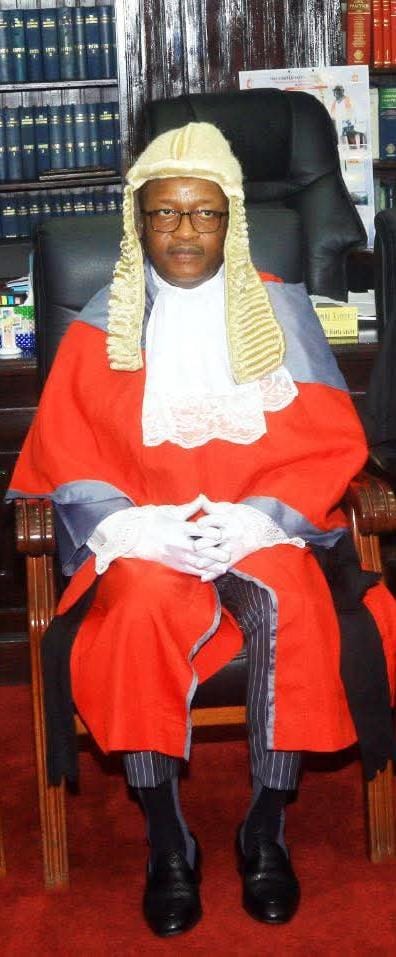
On October 20, 2025, the Judiciary of Sierra Leone issued a Public Notice announcing that the Honourable Chief Justice had assigned seven Judges and four Magistrates in the Western Area, and directed all Judges and Magistrates in the Provinces to “expeditiously deal with drug-related offences.”
The directive signed by Mrs. Hulamatu F. Christian-Moses, Deputy Master and Registrar of the High Court — also ordered extended court sittings, including Saturdays, as part of an ongoing judicial reform aimed at ensuring the “efficient and timely adjudication” of drug-related cases.
On paper, it is a bold, decisive, and long-overdue move.
But on the streets, in the ghettos, and in the minds of ordinary people, a louder question echoes:
Is this the awakening of justice, or just another institutional performance meant to calm public anger?
For months now, Sierra Leone has been battling a deepening drug crisis — driven by the devastating spread of Kush, a cheap, synthetic substance that is slowly stealing the future of the country’s youth.
In communities from Waterloo to Aberdeen, and from Kroo Bay to Bormeh, the signs are everywhere: blank stares, slumped bodies, and the silent grief of parents who watch their sons fade into addiction.
When the Chief Justice’s directive was announced, many citizens welcomed it as a sign that the Judiciary was finally moving from rhetoric to action.
But for others, it sounded all too familiar another round of talk big, act small from institutions long accused of reacting to headlines rather than confronting hard truths.
This is not the first time Sierra Leone’s justice system has vowed to get tough on drugs.
From the high-profile seven suitcases of cocaine scandal discovered in a diplomatic vehicle belonging to Sierra Leone’s embassy in Guinea to other major cases that mysteriously went quiet, the record of accountability has been painfully thin.
Despite frequent declarations of urgency, the pattern remains the same: no convictions, no transparency, no closure.
So when the Judiciary now promises “speedy trials,” many citizens respond with weary skepticism.
Because in Sierra Leone, speed has never been the problem sincerity has.
Where was this urgency when international reports exposed Sierra Leone as an emerging drug transit hub?
Where was this fire when notorious foreign traffickers like Jos Leijdekkers, a wanted European drug lord, were reportedly living comfortably in the country under quiet protection?
For many observers, this new judicial energy feels more like symbolic theatre — a stage-managed show of motion rather than genuine movement.
Real justice, they argue, is not just about punishing users in the ghettos, but dismantling the power networks behind the trade — those with political cover, money, and influence.
Adding a layer of irony, Hon. Sengepoh Thomas, Speaker of Parliament, recently claimed that “the level at which we are propagating Sierra Leone as a drug nation is not like that.”
His words sparked anger and disbelief.
For citizens living with the daily horror of addiction, such a statement felt detached from reality even insulting.
For parents whose children have fallen to Kush, it sounded like denial dressed as diplomacy.
And for the Judiciary now promising reform, it created an uncomfortable contradiction between government branches:
If Parliament downplays the crisis while the courts declare urgency, who exactly is leading the fight?
Beyond the politics, the statistics, and the press releases, the real casualties of Sierra Leone’s drug war are found in its homes and streets.
They are mothers who hide their savings from addicted children.
Young men who once dreamt of being engineers, now begging at junctions.
Communities slowly hollowed out by a drug that kills ambition before it kills the body.
These are not numbers they are names.
They are stories.
And they are the reason the Judiciary’s words must translate into visible justice.
Behind every addict lies a chain dealers, suppliers, and protectors.
Many of these networks thrive because of institutional complicity and political protection.
Until the law is applied without fear or favour, the cycle will continue.
Drug traffickers are not afraid of courts; they are confident in their connections.
And unless those connections are broken, no directive will change the outcome.
If the Judiciary’s latest move is to mean anything, it must be more than a well-written notice.
It must be backed by transparency, consistency, and courage.
Citizens need to see convictions that restore confidence.
Victims need to see rehabilitation, not just arrests.
Parents need to feel hope, not helplessness.
And perhaps most importantly the state must move from denial to duty.
Sierra Leone today stands at a moral and institutional crossroads.
The Judiciary’s new stance is welcome but it must be judged by results, not rhetoric.
The Speaker’s dismissal of the crisis does not match the lived experience of thousands of citizens.
And the fight against drugs cannot succeed if the nation remains divided between those who suffer, those who supply, and those who pretend it’s not happening.
Justice must not only be done it must be seen to be done
For everyone.
Otherwise, this new judicial momentum will end like many before it:
Strong on paper. Silent in practice.